The term subspace is often used in D/s conversation, for describing the ‘high’ a submissive can feel during a scene. Simply put, the experience of intense pain, and/or pleasure can trigger a nervous system-wide response with a release of chemicals including endorphins, enkephalins, and epinephrine from different areas of your brain. These are the body’s natural pain killers, in reality, our body’s very survival instincts kicking in.
Category Archives: General BDSM Information
BDSM Basics: Caring For Your Toys
After diving head first (as most of us do) into the world of BDSM we generally start to feel comfortable enough to purchase a few “toys”, then a few more, and a few more, and just a couple more.. until we have a collection that needs its own hiding space in the back of the closet. Sure, these toys are plenty of fun, but do you know how to properly take care of them? Continue reading
Poll Results Are In! (Pleasure, Pain, and Science)
While not hugely successful, we did get about 100 votes on the poll, so that does at least make it an easy number to work with! I have had a lot of fun putting this together in the last couple of weeks. Let me begin by thanking our readers for participating, because of your help, my ‘theoretical’ fourth part was able to become reality, so I really couldn’t have done it without you! Now, onto the results!
For the ‘yes or no’ question about making a consistent, conscious effort to raise your pain threshold being important to you or not, a resounding 70% of us said ‘Yes!’
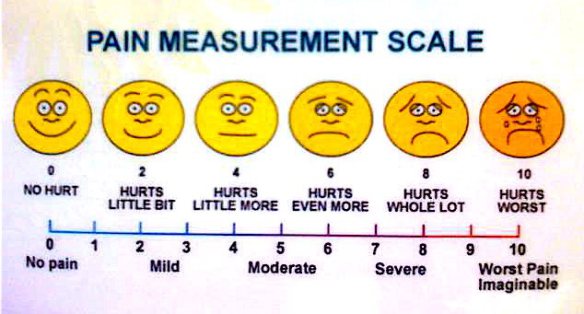
50% of us say we would tell our partners to stop what they were doing between 8, 9 , and 10, with 8 being ‘much more pain than pleasure’, and 10 being no pleasure at all, only pain! We really do like it rough!
In question one, I asked about your pain threshold in regard to what you say it was during your first BDSM experience involving pain. 6 and 7, respectively, were the most popular answers. In the second question, I asked where you consider your threshold to be right now, at this moment, and 8 and 7 were the most popular, respectively. It turns out 56 of us were at a ’5 or under’ on the ‘pain subjectiveness’ scale when we started, and only 28 of us now consider ourselves to be at a 5 or under. So, roughly a little more than 25% of us seem to have had a significant increase in our pain threshold, while 70% of us make an effort to raise it. Are we doing anything wrong? I highly doubt it. There wasn’t any way for me to work in more variables, such as, ‘how long you have been in the lifestyle to begin with’, and, ‘do you participate regularly in sessions involving pain’, as I think this would have allowed for explanations as to why or why not our pain threshold is stagnant or growing. I think also, it may be likely that those in long term relationships with their partners might have an ‘easier time’, if you will, working on their pain thresholds, on account of things like experience with one person regularly, and just being plain comfortable enough to be able to ‘let go’. That is just my opinion though, and I wish I could have included things like that. Maybe PollDaddy will add some new formats and features or something, and I may be able to do it in the future.
This may raise more questions than answer them, and I suppose any scientific study worth its weight garners more questions than answers at the end, haha! Within those results, however, is something to be proud of I think. Since 7 and 8 were the most popular answers for ‘right now’ thresholds, and most of us have to ‘stop’ at 8, 9, or 10, this means we are, in fact being very open and honest with our communication in regards to how much pain we can bear. Good for us for living up to our own standards and practicing what we preach! Now, go give yourself a nice pat on the back……..or a flogging, whatever you prefer, since its all just subjective anyhow…..
If your interested in the research that brought this piece to its conclusion, just read these first two articles about Pleasure, Pain, and Science. The poll is actually still open, so it might be fun to see if it evolves over time and any averages change. Hope you enjoyed, and thanks for reading!
Part One
http://asubmissivesinitiative.wordpress.com/2013/07/21/pleasure-pain-and-science-part-one/
Part Two
http://asubmissivesinitiative.wordpress.com/2013/07/23/pleasure-pain-and-science-part-two/
The Poll (part 3)
http://asubmissivesinitiative.wordpress.com/2013/07/27/poll-one-the-subjectiveness-of-it-all/
Beginner’s BDSM on a Budget
Link
I have written this article with beginners in mind, so for those of us that are more seasoned, you may not learn anything new by reading this, but, then again, you might, and we all had to start somewhere! If you’ve ever been to an adult toy store, or shopped online for toys, I’m sure most of us have noticed something. Unless you have quite a bit of disposable income, a lot of these things are pretty expensive, not to mention some being straight up laughable.
The Good Girl’s Guide to Domination
This is a PREVIEW article written by Akasha. To read the other chapters, visit her website. COPYRIGHT 2003, 2005 [email protected]

Photo from http://www.mrwallpaper.com
“I believe that many women are intimidated by and uncomfortable with the concept of erotic female domination because of the way they see it portrayed in adult films and in the media. I believe that men also develop many bad habits after years of satisfying their fantasies on their own, and focusing on their own pleasure. Through communication, trust and safe, sane & consensual exploration of erotic power exchange, I think many couples can experience pleasure they never imagined, and also develop better relationship communication and intimacy.” Continue reading
Honesty: A Dominant’s Side, a Submissive’s Point of View
To be a Dominant, a true Dominant, is a hard job. Aside from the usual load of daily ‘Domhood’, a Dominant has to read His submissive. This is a very hard thing to do because how is one Man, whom from our submissive eyes is supposed to be this all knowing and in control person up on His pedestal, unable to just read us like a book? He has before, with a touch, a command. He’s shown that He knows you in how He treats you. So we assume its easy for Him to do so, to see through us because from the moment we became His, we think or believe somewhere deep within our minds that somehow He gained these magical ‘Dominant Powers’ that make Him everything He is when He is with us. He doesn’t and there isn’t. He is just a Man. A strong Man who can melt us with one glance and somehow bring out the best, or at least the desire to be our best, just for Him. Continue reading
How BDSM Saved My Marriage and Gave Me Peace of Mind
This is my personal story about how discovering and learning about BDSM helped my husband and me come to an important understanding within our marriage, as well as guided me to a place in my life where I am now comfortable with my body and who I am as a person. This is the journey from a vanilla marriage that was quickly falling apart to a 24/7 D/s lifestyle that has helped us become closer than ever. Continue reading
POLL ONE: The ‘subjectiveness’ of it all!
The two articles I have posted preceding this poll are here, if you care to look at them: part one -http://asubmissivesinitiative.wordpress.com/2013/07/21/pleasure-pain-and-science-part-one/ part two - http://asubmissivesinitiative.wordpress.com/2013/07/23/pleasure-pain-and-science-part-two/
I am limited on what kind of poll I can do here on WordPress, so therefore the type of results I can garner is limited as well. So,this is a simple poll, but hopefully will give us some idea of “The ‘subjectiveness’ of it all!” Here goes my first ever poll. I will be using the scale of 1-10 like you would see in a doctor’s office for these, like this one…..
Once we get enough people to take the poll, I will work on a post to present the results to see if they are close to what the research says they could be. Please share this with anyone you know in the lifestyle so we can get as many votes as possible. The more votes the polls get, the more realistic the results will be. If this one succeeds, I might have another! Hope you enjoyed participating!
Pleasure, Pain and Science…Part Two
Before you read this, please take a look at Part One! right here- http://asubmissivesinitiative.wordpress.com/2013/07/21/pleasure-pain-and-science-part-one/, which discusses Pain. There will be a poll for Part Three, for you to participate in, so we can analyze a little information for ourselves, and maybe gain some insight. Either way, I hope you will enjoy it, and benefit from the information I’ve gathered.
How do we translate pleasure? you could start with asking the question, “Why do I like what I like?”
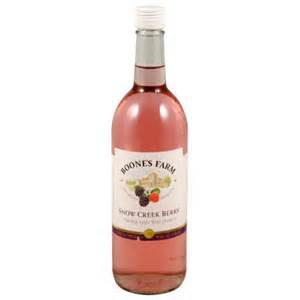
Let’s have a look at some research. A study was done with people volunteering to sip a glass of wine while being in a neuro-imaging scanner. While they are doing this, a screen is in front of them, telling them about the wine. Some are told it’s expensive, etc., some are told its cheap, etc. Some are told nothing. Not unexpectedly, those who were told it was expensive wine thought it tasted much better than any cheap wine they ever had. (It was all the same wine, of course). Besides this though, the pre-frontal cortex, which responds specifically to pleasure, and reward, lit up like a Christmas tree! This did NOT happen with the volunteers who were told they were drinking the cheap wine! This suggests that their responses (your responses!) are not just about the wine itself, but your perception of it. So, what you think about the wine, can apparently make it taste better, or worse!


What you think about what someone looks like, seems to have a lot to do about how you feel about that person. Studies done on ‘happy couples’ resoundingly show that those who think their spouses look better than anyone else, are the same couples that say they argue less, and have more sex. Does this mean those couples have more pleasure? Or love each other more? Think about it. Think about your grade school bully, or the person who shares your office that never shuts up. Now think about how attractive they look in comparison to your best friend/partner/child? Definitely interesting.
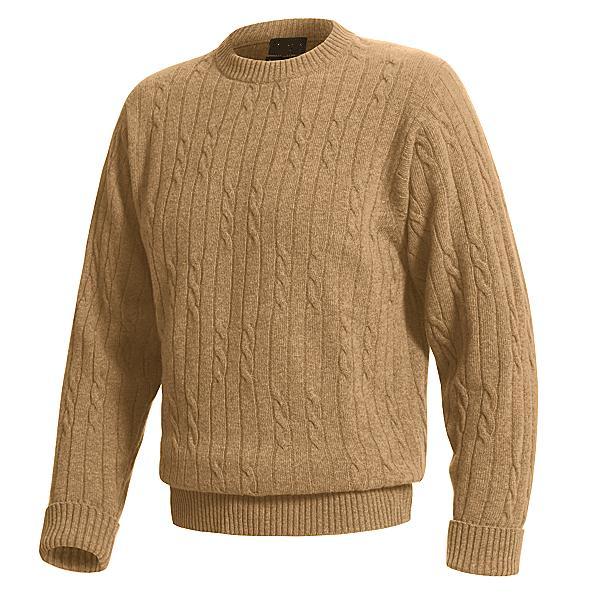
Capgras Syndrome is an affliction where the sufferer believes someone close to them has been replaced by an impostor. As you can imagine, this usually has tragic consequences for the afflicted and their family, because they believe they are killing or removing the impostors and making things better. One case in 1931, had a happy ending though.
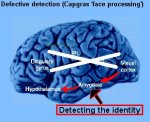
“In 1931, researchers described a woman with Capgras Syndrome who complained about her poorly endowed and sexually inadequate lover. She was happy to report that he had a double who was rich, virile, handsome and aristocratic.” HA!** (see below)
So, who you think you are looking at can have a profound effect on how you react to them. Now, think of consumer products. One reason we use them is purely utilitarian, i.e., what they can do for us. Think of a couple of everyday things, like, oh, i don’t know, a sweater and a pair of shoes. (pictures inserted below)
The sweater keeps you warm. Maybe it’s even in style, so you’ll look like you give a damn about what Cosmo says. Shoes, they protect your feet, maybe help you run faster. How much would you pay for an average sweater? For average shoes?

Now, what if I told you that sweater was worn by George Clooney, and the shoes worn by Michael Jordan? (Insert whatever your favorites are) What kind of responses are lighting up in your brain now? Would you pay more? Do you want it more because of the history that surrounds it? The status or money it might bring you? What you know, or even just what you think you know about anything, or anyone for that matter, has a lot to do with how much you think it is worth. With how much pleasure you think it will bring you. A wedding ring may be considered irreplaceable, and therefore priceless, but usually only by the beholder. Therefore, your response to how much you like something or someone, and how much pleasure you get from them or it, is deeply related to your beliefs about how it came into being.
A study was done on chimps, using a reward system. Signal lights turned on, meaning a reward for work was about to be given. First, the reward was given 75% of the time, and dopamine levels in the brain were measured. Next they reduced the reward percentage to 50%. Surprisingly, dopamine levels were higher with the 50% reward, seemingly meaning the element of uncertainty has a lot to do with pleasure. How does this help us understand ourselves? well the human element in this experiment is time. The time between finishing the work and receiving the reward can be a non-issue for us. Religion is a perfect example. Some of us are able to keep up our levels of excitement about a certain reward, presumably satisfied with not being able to receive it until after we are dead! This is a quality unique to humans, as far as we know. It is also the exception to the rule, however, as most of the time, our own dopamine levels, (and therefore our excitement about it) drop if we feel too much time has passed in between the work and the reward.
Puts the BDSM allure into perspective for me, certainly!How many of us look forward to our Master’s reward after the work is done? This may also help us when we think about the Why’s, How’s, and When’s of Sub Drop. Maybe understanding the ups and downs of our neurological system might help us identify triggers and other responses, and make some scientific sense out of all those emotions!
Think back to the beginning of your exploration into the lifestyle. Did it meet your expectations, exceed them, or neither? How, or from whom, did you first hear about it, and how do you think that might have affected your ideas about it in general?
So, pain and fear seem to be very closely related. Pleasure, beauty, and worth seem to be just as close. With that in mind, I will close by saying if beauty is in the eye of the beholder, then surely pleasure and pain must be as well.
I’ll have the poll posted very soon!
Links to relative info/some resources:
**As quoted by Physchologist Paul Bloom, who has some very interesting research: http://www.fastcodesign.com/1665606/how-expectations-can-turn-anything-from-worthless-to-priceless
http://on.aol.com/video/robert-sapolsky-on-the-dopamine-and-pleasure-516981862
How to Spot a Potential Abuser
Those red flags are there to expose an abuser if only we were trained to see them. You will read the list and think “Now why oh why didn’t I think of that!” This checklist is a general one, as well all know in the BDSM lifestyle, some of these signs are not that of an abuser but of a good dominant, but like all things it doesn’t hurt to have a good idea about what might fall under the category of a potential abusive relationship/person.
HOW TO SPOT AN ABUSER CHECKLIST
- Are you afraid to act like yourself with this person? (no dominant should make you scard to act like your normal self, if you are then that is not right)
- Does this person refuse to talk AND listen to you? (The key to a lasting BDSM relationship is open communication, if your dominant is not listening to you, and will not talk with you about any of your fears or the like, then this might be called a red flag by many)
- Do you catch this person in lies?
- Are you this person’s only friend? (this does not always denote a abuser, some of us do not have a large friend list that we tend to associate with, this does not necessary mean the person will turn out to be an abuser)
- Does this person talk badly about other women?
- Does this person mistreat their mother/father, siblings or ex?
- Is this person mean to animals?
- Is this person subject to road rage?
- Does this person anger easily?
- Does this person hold grudges?
- Does this person express their anger physically?
- Is this person upset that you have other friends?
- Is this person jealous of your friends and relatives?
- Does this person try to cut you off from your friends? (This for many that I know if number 1 red flag)
- Does this person try to keep you from practicing your faith?
- Would you not consider this person a friend outside of this relationship?
- Is this person totally fixated on you? (some people say that there is a different between a loving partner and someone who is fixated on you, and its true, but some partners who are considered to be extreamly love and caring unfortunatly by some fall to various degrees into this catagory, thus its up to you to trust you own instints in this matter)
- Was this person abused as a child? Was their mother abused?
- Is this person co-dependent? (again this is a debated topic among many people apparently, some believe that you can’t have a M/s relationship without developing a co-dependence, others will argue otherwise.)
- Does this person have a poor self-image?
- Does this person have poor impulse control?
- Is this person preoccupied with sex?
- Does this person have a history of alcohol or drug abuse or a problem with compulsive gambling?
- Has this person pushed for intimacy early in the relationship? Perhaps making all sorts of promises for marriage and hope for the future. Has this person tried to brush aside your concerns as just jitters and tell you to just “trust them”?
- Does this person use guilt to try to manipulate you?
- Does this person unjustly accuse you of flirting with others?
- Does this person take your money?
- Must you always watch the TV program that this person wishes to see or go to the movie of their choice? (this for some might be a red flag, but in a M/s relationship its not necessarly so, depending on the level between the two partners.)
- Has this person tried “playful” forceful sex? Not stopping until you REALLY objected? (as many might think, that might not be a red flag, but it can be if the dom doesn’t stop when a safe word is used)
- Has this person threatened to hit you?
- Has this person hit, shoved, bit, kicked or in other ways tried to injure you? (This is not always the case as you might know, but then again doing this in anger is never good at any point in time, also if the intent of injury is more then temp or consentual then well of course its up to you to feel if its abuse or not)
- Has this person destroyed any of your property? Has this person threatened to do so?
- Does this person have a dual personality? Is this person nice and friendly most of the time, then cruel and heartless at other times?
- Does this person have to know where you are every minute and check up on you to make sure? (this might not always be a red flag, if it is something that is already known within your relationship, and has been agreed upon)
- Does this person check through your computer history, e-mail, cookies and logs to see where you have been? Does this person read your mail? Listen to your phone calls?
- Are you not allowed to be alone with friends and family?
- Does this person have a problem with authority figures?
- Does this person have extreme highs and extreme lows? Simple questions. Powerful questions. Perhaps even life saving questions.
If you answer YES to more than just even one or two of these you are in what many people would call an abusive relationship. The higher the number of questions checked the more serious the potential of the abuse is likely to be. However, this list is not comprehensive. Your particular situation will likely be somewhat different. If you feel you are being abused, seek professional counselling. Nothing in this checklist should be considered a substitute for counselling.
If you feel you are in an abusive relationship, get help now! You can take the first step by calling the National Domestic Violence Hotline at 1-800-799-SAFE (7233) (TDD 1-800-787-3224) or go to http://www.ndvh.org